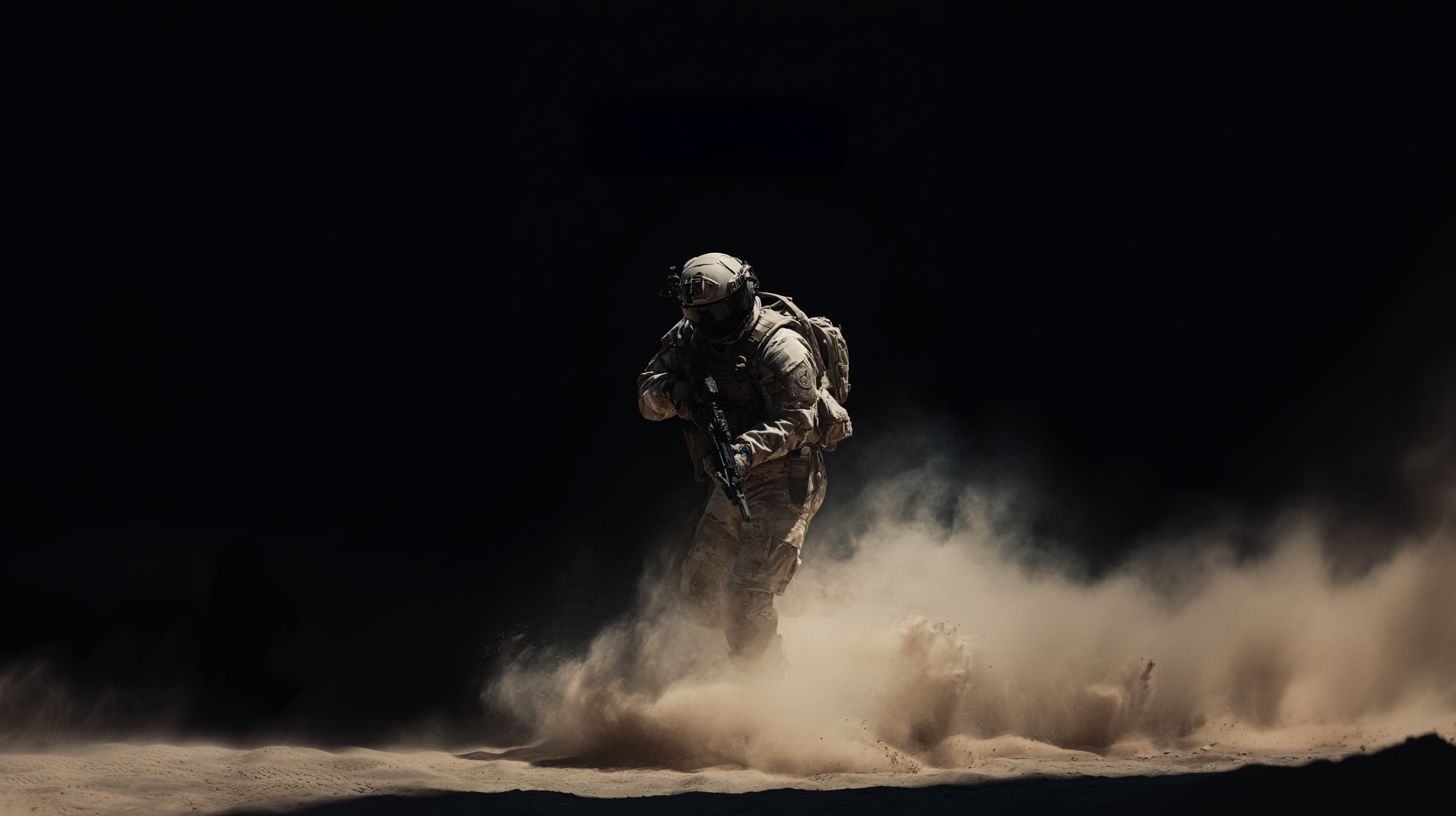
When it comes to tactical gear, Ballistic helmets also play a very prominent role.
When it comes to tactical gear, Ballistic helmets also play a very prominent role. Not only do they provide ballistic protection, but are also an essential tactical tool, which is used to carry loads of accessories like night vision goggles, lights, communication gear, and a lot more.
Tactical helmets are a very important part of a soldier’s gear and have saved many lives. Special forces personnel like SEAL teams also regularly use ballistic helmets. Special tactical military and law enforcement teams like SWAT and FBI tactical units may also use Ballistic helmets.
Though most people generally know about body armor, they usually have a lot of questions about ballistic helmets. Therefore, we’ll try to answer all of your burning questions about Ballistic helmets.
WHAT’S IN A BALLISTIC HELMET?
A ballistic helmet does not only need to stop bullets, it should also be comfortable to wear and practical in the field. Therefore, a ballistic helmet needs to have some padding and webbing inside it.
PADDING
A tactical helmet can prevent a bullet from penetrating your head, but getting hit while wearing one could still be deadly. Bullets carry a lot of force, and even though they can be stopped from penetration, all that force has to go somewhere.
With body armor, the force is absorbed into a person’s chest, which can even result in broken ribs and punctured lungs. However, the force is still bearable when it is dispersed all over a person’s chest.
When a bullet hits your tactical helmet, the force can be way too concussive for your head, and sometimes the blunt impact can even be enough to kill a person. Therefore, Ballistic helmets need to have some sort of padding in them, which acts as a cushion and mitigates the concussive forces.
Typically, the padding of a bulletproof helmet is made from foams, rubbers, or plastics, and you can also find some hybrid options. Foam padding offers maximum comfort. A wide variety of foams, having different density levels made from either open-cell or closed-cell polyester, polyurethane, or polyethylene.
Padding is an industry standard for Ballistic helmets, and almost all of them have one form of padding or another.
RETENTION STRAPS (WEBBING)
Combat helmets need to have a good retention system as well, to make sure that it stays in place and feels comfortable in tactical situations. Moreover, with all the tactical gear mounted on military helmets these days, a good retention system is even more important.
Old military helmets like the ones used in World War I & II had simple leather straps, however, these days, tactical helmets have a lot more refined harness systems, which allow for more comfort and better retention, especially since modern military helmets also need to be capable of carrying tactical gear.
Helmets like the ACH (Advanced Combat Helmet) and the MICH helmet( Modular Integrated Communications Helmet) have modern H-harnesses. The retention system is attached to the helmet at four points. It has a chin cup and multiple adjustment points allowing you to adjust the helmet to the specific shape of your head.
Most people also opt for H-Nape and X-Nape chinstrap aftermarket harness systems, which are a lot better at keeping the helmet stable when optics are mounted to it.
In recent years, Dial liner systems have also become quite popular on combat helmets. Similar to the webbing of some construction hard hats, the Dial Liner has a ratchet-type system, which helps the helmet fit perfectly to the circumference of the wearer’s head.
These days, some of the most commonly used retention systems are the Revision Cobra P2 Modular Suspension System, PROTECH/Safariland R2S System, and the OPS-CORE Occ- Dial Liner System.
WHAT’S ON THE TACTICAL HELMET
SIDE RAILS
Side rails are an important part of any modern combat helmet and they serve as attachment points for a variety of gear and accessories. Most commonly, they are used to mount communication gear, and in some cases hearing protection as well.
In combat roles, side rails are also used to mount flashlights, ballistic face protection masks, and face shields as well. Most modern tactical units also mount cameras on their helmets to record and send live streams of the combat back to their command centers.
In certain situations, side rails can also be used to mount gas masks.
NVG (NIGHT VISION GOGGLES) SHROUD
NVGs or as they are more commonly referred to by military personnel NODs are a very important piece of gear for ground troops. They improve visibility in the dark and allow the military to conduct covert operations with more effectiveness, increasing the observational capabilities of soldiers.
Therefore, most modern helmets also have NVG Shrouds, which can be used to mount night vision devices. These devices can then be simply folded open to use in a matter of seconds.
WHO USES HELMETS BY TYPE OF HELMET.
ACH/MICH TYPE OF HELMET
The ACH and MICH are some of the most commonly used ballistic helmets these days. They are primarily used by the military and some security officers as well. The ACH is the current standard issue Ballistic helmet of the US military, and the MICH is an improved version of the ACH, specially designed to provide integrated communication devices, and is also used by some military units.
These helmets were designed for providing ballistic protection, and are an important part of the military’s personnel armor system. They are usually made with a Kevlar lining, and offer NIJ level IIIa protection, which means that they can stop all handgun rounds. However, in some incidents, they have even stopped AK rounds at a longer range.
HIGH CUT TACTICAL HELMETS WITH SIDE RAILS AND SHROUD
Bulletproof helmets are available in multiple shapes. High-cut helmets have a smaller profile, and where they would provide as much head protection as a full-size low-cut helmet, they provide a better platform for mounting accessories, like comms, lights, cameras, and a lot more.
These helmets are commonly used by SWAT teams and special tactical units in the military and law enforcement. Many civilians who are also tactical freaks like to buy these helmets as well.
PASGT MILITARY HELMETS
PASGT stands for Personal Armor System for Ground Troops. It was the primary body armor system used by the US military from the 1980s to 2000. The PASGT helmet was made from Kevlar and provided limited ballistic protection. Primarily, it was effective in protecting soldiers against shrapnel, and several other threats on the battlefield.
BUMP HELMET
BUMP helmets aren’t used for protection against bullets. They don’t have Kevlar in them and are usually made from plastics. They are used in many non-ballistic operations. For instance, riot control teams may use them to mount face shields, or certain branches of the military, like engineers, may use them to mount lights when working in dark areas.
IS IT WORTH BUYING A BALLISTIC HELMET FOR A CIVILIAN?
Though civilians can legally buy bulletproof helmets is it worth it? Well, that depends a lot on your preferences. Realistically, in a self-defense situation, you will hardly have time to get to your self-defense weapon, however, if you can put on body armor and a ballistic helmet, you will obviously have an advantage.
On the other hand, if you simply want a ballistic helmet because you think that they are cool, then you have every right to buy one. You can buy any kind of bulletproof helmet with loads of tactical gear to mount on them.
So, if you want a ballistic helmet, then it is completely worth it, however, I wouldn’t say that they are an absolute necessity for home defense.
WHEN DO CIVILIANS NEED A BULLETPROOF HELMET?
In any situation where a civilian may be under fire, having a ballistic helmet can have a significant advantage. However, such situations are rare, and even when they occur, people don’t have enough time to put on their bulletproof helmets.
So, there aren’t many situations in which a civilian would need a bulletproof helmet, but if they want one, they can easily buy it.