Explore The Role of Body Armor in Active Shooter Scenarios for comprehensive insights into protection gear and its significance.
Key Takeaways
Active-shooter planning should emphasize avoidance, evacuation, communication, and training first.
Body armor can be one part of a safety plan, but it should never be treated as a substitute for emergency procedures.
Organizations should align equipment decisions with role, policy, training, and lawful use.
Claims about protection should be tied to documented armor ratings and realistic threat assumptions.
Body armor protection is no longer just for the movies. Every year nearly 3,000 law enforcement officers in the U.S. are saved by body armor, according to the Department of Justice. But that number hides an important truth: body armor doesn’t make anyone invincible — it’s engineered for specific threats, environments, and trade-offs, and those details matter a lot, especially in active shooter situations.
How This Fits Into Your Buying Decision
Use this article as one step in a larger buyer path. Start with Main Criteria When Choosing the Best Body Armor, then compare Preparedness Guide - Take Responsibility for Your Safety and Guide to Ballistic Shields in Active Shooters Situations before choosing equipment.
Active shooter events change the equation. They’re chaotic, fast-moving, and can involve handguns, semi-automatic rifles, or a mix — sometimes fired from close range, sometimes at distance.
The Importance Of Body Armor In Active Shooter Situations
Survival And Risk Mitigation
Strategic Protection Considerations
How Body Armor Protects Against Firearms
Ballistic Energy Dissipation Mechanics
Material Science And Protection Principles
Real-World Applications Of Body Armor In Law Enforcement
Operational Risk Mitigation
Technological Adaptation And Performance
Understanding The Limitations Of Body Armor
Ballistic Protection Constraints
Critical Performance Considerations
Quick Summary
Takeaway | Explanation |
|---|---|
Understand body armor levels | Different levels cater to specific threats, influencing your choice of protection. |
Body armor enhances survival rates | Research shows that wearing body armor significantly reduces injury risk in active shooter situations. |
Material knowledge is key | Familiarize yourself with materials like Kevlar and ceramic for informed choices in armor selection. |
Recognize its limitations | Body armor can’t stop every threat; understanding its constraints is essential for safety. |
Prioritize professional gear for law enforcement | Body armor is crucial for officers during various high-risk situations to ensure their safety and operational capability. |
What is Body Armor and Its Types?
Body armor represents a critical personal protection technology designed to mitigate ballistic threats and reduce potential injury during high-risk scenarios. At its core, body armor is a specialized protective garment engineered to absorb and dissipate the kinetic energy from projectiles, preventing penetration and minimizing potential trauma to the wearer.
Fundamental Protection Classifications
Body armor systems are scientifically categorized based on their ability to stop different types of ammunition and projectile threats. The National Institute of Justice provides standardized protection levels that help users understand the precise defensive capabilities of their protective gear:
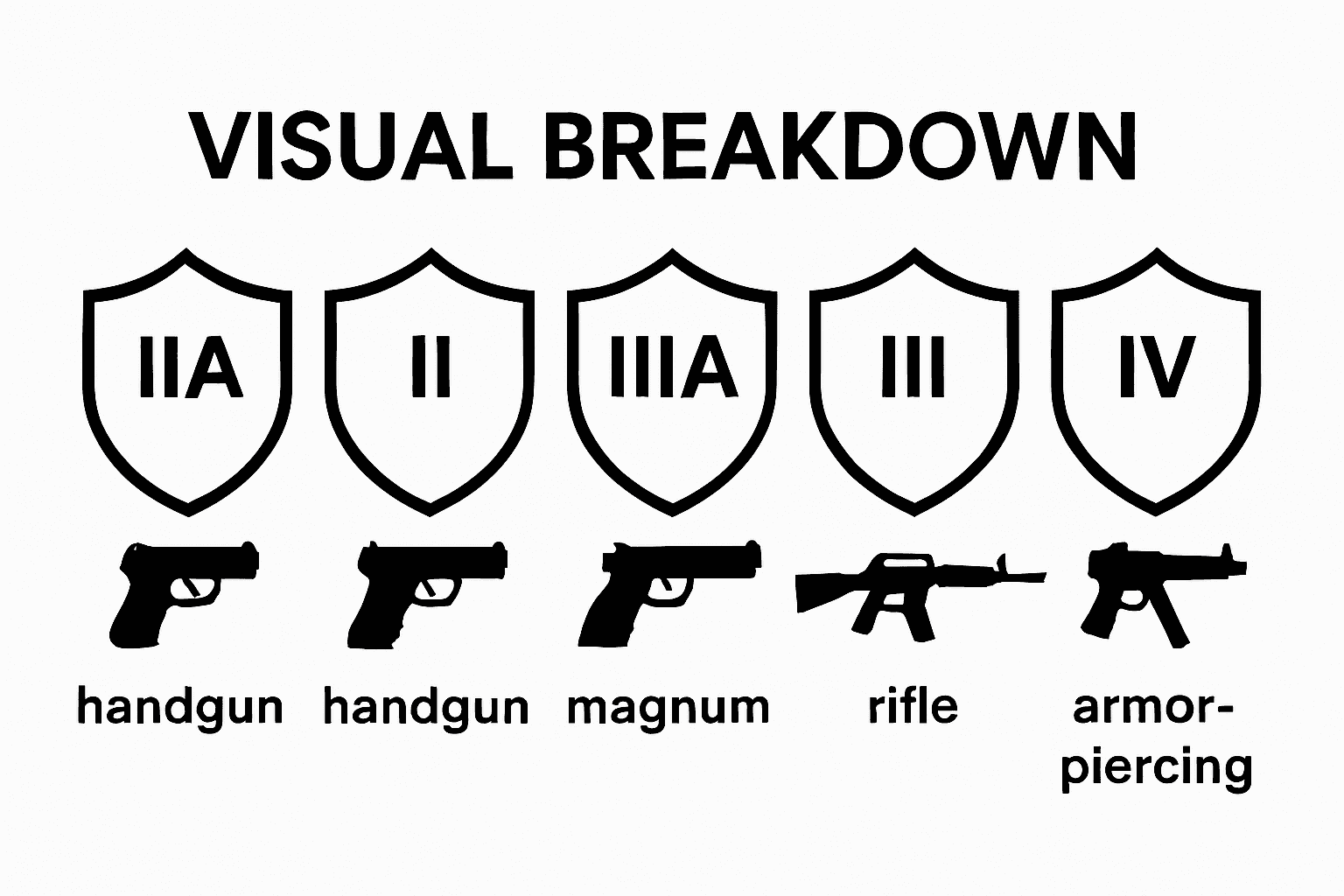
Level IIA: Designed to stop lower velocity handgun rounds like 9mm and .40 caliber
Level II: Provides protection against higher velocity 9mm and .357 Magnum rounds
Level IIIA: Offers defense against .357 SIG and .44 Magnum projectiles
Level III: Capable of stopping rifle rounds like 7.62mm NATO
Level IV: Highest civilian protection level, stopping armor-piercing rifle ammunition
Material and Construction Considerations
Modern body armor incorporates advanced materials that balance protection, weight, and mobility. Soft armor typically uses high-strength synthetic fibers like Kevlar or Dyneema, which can flexibly distribute and absorb projectile energy. Hard armor plates, often constructed from ceramic or polyethylene composites, provide rigid protection against high-velocity rounds.
For those interested in understanding more about the technical nuances, read more about our body armor material types to gain deeper insights into how different materials contribute to personal protection strategies.
Understanding body armor is not just about selecting protective gear but comprehending the science of ballistic defense. Each protection level represents a carefully engineered solution designed to offer maximum safety while maintaining wearer comfort and operational flexibility.
Below is a comparison table organizing the key NIJ body armor protection levels and the corresponding ammunition threats they are engineered to stop, summarizing information for easier reference.
Protection Level | Typical Threats Stopped | Main Material Types |
|---|---|---|
Level IIA | Lower velocity handgun rounds (9mm, .40 caliber) | Soft (Kevlar, Dyneema) |
Level II | Higher velocity 9mm, .357 Magnum rounds | Soft (Kevlar, Dyneema) |
Level IIIA | .357 SIG, .44 Magnum projectiles | Soft (Kevlar, Dyneema) |
Level III | Rifle rounds such as 7.62mm NATO | Hard (Ceramic, Polyethylene) |
Level IV | Armor-piercing rifle ammunition | Hard (Ceramic, Polyethylene) |
Body Armor in Active Shooter Situations
Active shooter scenarios represent unpredictable and rapidly evolving threats where personal protection becomes critically paramount. Body armor serves as a crucial defensive technology that can significantly reduce the likelihood of fatal or life-altering injuries during these high-risk encounters.
Survival and Risk Mitigation
Research from the FBI demonstrates that law enforcement officers wearing body armor have substantially improved survival rates during violent confrontations. The protective capabilities of body armor can mean the difference between life and death, offering essential protection against various ballistic threats encountered in active shooter situations:
Rapid Threat Neutralization: Allows personnel to maintain operational effectiveness even after receiving direct hits
Psychological Confidence: Provides mental reassurance during high-stress scenarios
Increased Response Capabilities: Enables continued intervention and potential threat mitigation
Strategic Protection Considerations
Body armor plays a multifaceted role in active shooter scenarios beyond physical protection. It represents a strategic defensive mechanism that provides critical seconds for response, escape, or counteraction. Different armor levels offer varying degrees of protection, with higher-level systems capable of stopping rifle rounds that standard handgun-rated vests cannot intercept.
Explore our essential body armor buying tips to understand how to select the most appropriate protection for diverse threat environments. The selection process involves carefully evaluating potential risks, mobility requirements, and specific operational contexts.
Ultimately, body armor transforms vulnerability into resilience. By absorbing and dispersing kinetic energy from projectiles, these advanced protective systems provide a critical buffer between life-threatening violence and personal survival, offering tangible hope in scenarios where split-second protection can determine human outcomes.
How Body Armor Protects Against Firearms
Body armor functions through a sophisticated mechanism of energy absorption and dispersion, providing critical protection against ballistic threats. The primary objective is not merely stopping a projectile but minimizing the potential traumatic impact transferred to the wearer’s body during a high-velocity impact.
Ballistic Energy Dissipation Mechanics
Research from the National Institute of Justice reveals that effective body armor disrupts projectile energy through complex material interactions. When a bullet strikes protective gear, multiple protective strategies are simultaneously engaged:
Impact Absorption: High-tensile synthetic fibers stretch and deform to capture and distribute kinetic energy
Force Redistribution: Multiple layers spread the concentrated impact across a broader surface area
Momentum Interruption: Specialized materials create friction and resistance to halt projectile penetration
Material Science and Protection Principles
Different body armor materials employ unique protective strategies. Soft armor typically uses tightly woven synthetic fibers like Kevlar or Dyneema, which create a web-like network that catches and traps incoming projectiles. Hard armor plates, constructed from ceramic or polyethylene composites, function more like rigid shields that fracture and ablate incoming rounds, dramatically reducing their penetrative potential.
Check out our backpack armor options to understand how portable protection technologies have evolved. Modern body armor represents a complex intersection of material engineering, physics, and personal safety technology.
Ultimately, body armor transforms potential fatal encounters into survivable scenarios. By converting destructive kinetic energy into controlled deformation and dispersion, these advanced protective systems offer a critical layer of defense against ballistic threats, providing users with enhanced survivability in high-risk environments.
Real-World Applications of Body Armor in Law Enforcement
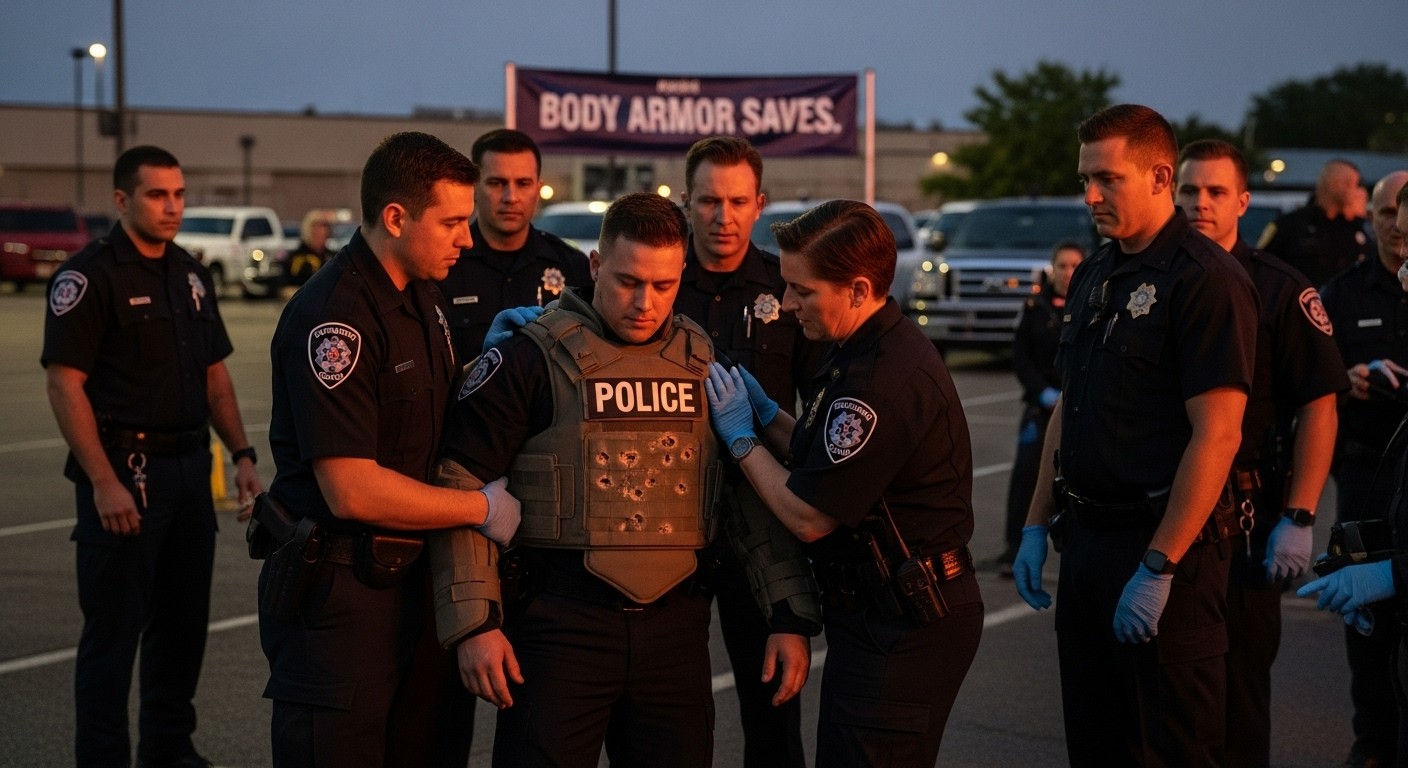
Law enforcement officers operate in dynamic and unpredictable environments where personal protection can mean the difference between life and death. Body armor has transformed from a supplemental safety option to an essential component of standard operational equipment, providing critical protection during high-risk encounters and routine patrol duties.
Operational Risk Mitigation
Department of Justice research demonstrates that body armor significantly reduces line-of-duty fatalities and serious injuries. Law enforcement professionals encounter numerous scenarios where ballistic protection becomes crucial:
Traffic Stop Interventions: Protection against unexpected vehicle-based threats
Domestic Dispute Responses: Safeguarding against potential weapon encounters
High-Risk Warrant Services: Minimizing vulnerability during potentially volatile situations
Active Shooter Interventions: Enabling continued operational effectiveness under direct fire
Technological Adaptation and Performance
Modern law enforcement body armor goes beyond basic protection, incorporating advanced materials and design principles that balance safety with operational mobility. Concealable vests allow officers to maintain a professional appearance while ensuring personal security, while tactical external carriers provide additional storage and adaptability for specialized equipment.
Explore our essential police gear recommendations to understand how protective equipment integrates with modern law enforcement needs. The evolution of body armor reflects a comprehensive approach to officer safety, recognizing that protection is not just about stopping projectiles but enabling confident, effective professional performance.
Ultimately, body armor in law enforcement represents a critical investment in human life. By providing a reliable defensive layer, these advanced protective systems empower officers to serve their communities with reduced personal risk, transforming potential life-threatening encounters into manageable professional challenges.
Understanding the Limitations of Body Armor
While body armor represents a critical personal protection technology, it is not an impenetrable shield. Understanding its inherent limitations is crucial for maintaining realistic expectations about personal safety and making informed protective equipment decisions.
Ballistic Protection Constraints
Research from the National Institute of Justice highlights that body armor has specific vulnerabilities that users must comprehend. Not all protective gear offers universal defense against every potential threat:
Angle of Impact: Bullets striking at oblique angles may compromise armor effectiveness
Repeated Strikes: Multiple impacts in the same area can compromise structural integrity
Energy Transfer: Even when stopping a projectile, significant blunt force trauma can occur
Material Degradation: Environmental exposure can weaken protective materials over time
Critical Performance Considerations
Body armor protection is not absolute and depends on multiple complex factors. Different armor levels provide varying degrees of defense, with soft armor typically protecting against handgun rounds while hard plates defend against higher velocity rifle ammunition. The critical understanding is that body armor reduces risk but cannot eliminate it entirely.
Learn more about first aid techniques for potential trauma to understand comprehensive personal protection strategies. Recognizing that body armor is a defensive tool, not an impenetrable barrier, is essential for responsible use.
Ultimately, body armor represents a calculated risk management strategy. By acknowledging its limitations, users can develop more comprehensive personal protection approaches that combine advanced gear with situational awareness, tactical training, and emergency preparedness.
The table below summarizes critical limitations and performance constraints of body armor, helping readers quickly identify the most important considerations related to protection and use.
Limitation | Explanation |
|---|---|
Angle of Impact | Protection may be compromised when projectiles hit at oblique angles |
Repeated Strikes | Multiple hits in the same spot can weaken armor and reduce protective capability |
Energy Transfer | Significant blunt force trauma can occur even if the projectile is stopped |
Material Degradation | Exposure to environmental elements can reduce material strength over time |
Coverage & Armor Level | Soft armor guards against handguns; hard plates needed for rifle threats |
Protect Yourself In Active Shooter Situation
In unpredictable active shooter situations, hesitation and uncertainty can cost lives. This article highlights a key challenge faced by professionals and civilians alike: the urgent need for reliable body armor that can stand up to real-world ballistic threats. When faced with moments of chaos, having the right protection is critical for survival and peace of mind.
AcelinkArmor.com understands what is at stake. Our advanced body armor solutions meet and exceed strict protection standards such as Level IIIA and Level IV, providing both security and comfort in high-risk environments. Whether you need concealable vests for everyday readiness, armor plates for added defense, or backpack armor options for discreet protection, you will find expertly designed products built to help you respond with confidence. Do not wait until it is too late. Visit AcelinkArmor.com now to choose gear that matches your personal or professional needs and take your safety into your own hands today.
Frequently Asked Questions
What is the purpose of body armor in active shooter situations?
Body armor is designed to provide critical protection against ballistic threats during active shooter scenarios, significantly reducing the likelihood of fatal or life-altering injuries for the wearer.
How does body armor improve survival rates for law enforcement officers?
Research indicates that law enforcement officers wearing body armor have substantially higher survival rates during violent confrontations, as it allows them to maintain operational effectiveness even after receiving direct hits.
What are the different levels of body armor protection available?
Body armor is classified into different protection levels, ranging from Level IIA for lower velocity handgun rounds to Level IV which can stop armor-piercing rifle ammunition. Higher-rated systems can provide enhanced defense in active shooter scenarios.
Can body armor protect against all types of firearms?
No, body armor cannot provide universal protection against all firearms or projectile types. Different armor levels are designed for specific threats, and users must understand the limitations regarding angles of impact and the energy transfer that occurs during a ballistic strike.
Recommended
Essential Body Armor Buying Tips for Personal Protection - Ace Link Armor
Body armor heat management - Why Heat Is the Hidden Enemy - Ace Link Armor
Understanding Thermal Comfort While Wearing Body Armor - Ace Link Armor
Continue Reading
These guides help answer the next questions a buyer usually has after this topic.