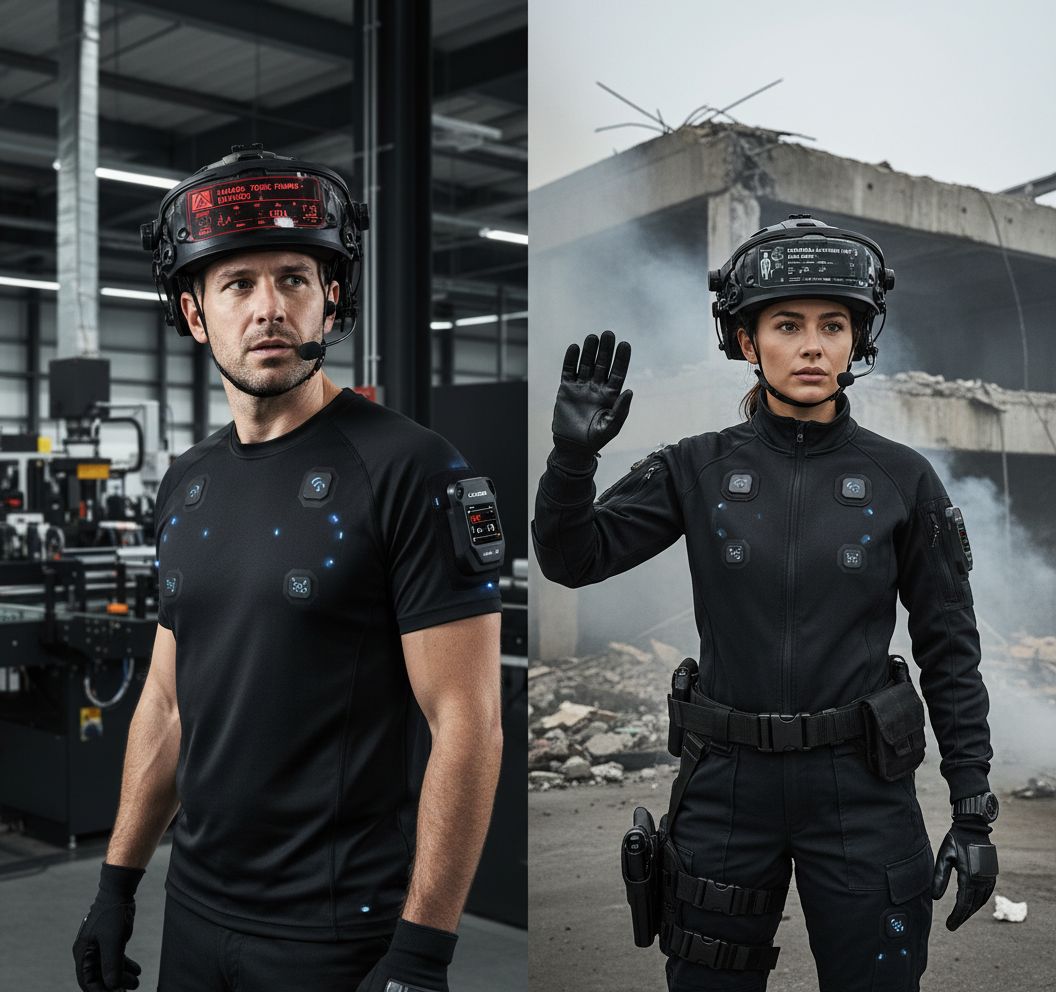
Explore Thermal Comfort While Wearing Body Armor, covering its importance, how it works, and key concepts for better protection and comfort.
Key Takeaways
Thermal comfort affects how consistently armor is worn, especially during long shifts or training.
Base layers, carrier ventilation, hydration, and breaks can reduce heat stress risk.
Heavier or less breathable setups may be appropriate for some threats but need realistic wear testing.
Comfort decisions should not override the required protection level, but they do affect compliance.
How This Fits Into Your Buying Decision
Use this article as one step in a larger buyer path. Start with Main Criteria When Choosing the Best Body Armor, then compare Body Armor Fit: Weight, Flexibility & Protection and Training with Armor: Best Practices for Conditioning and Movement. before choosing equipment.
Wearing body armor is about more than just staying safe from physical threats. It creates a thermal wall that significantly alters how your body handles heat, and research shows that body armor can raise core body temperature and increase your heart rate in challenging conditions. Most people think the real danger is what’s coming from the outside. Unexpectedly, what’s trapped on the inside—the heat and stress your body faces—might be the biggest challenge for anyone relying on protective gear.
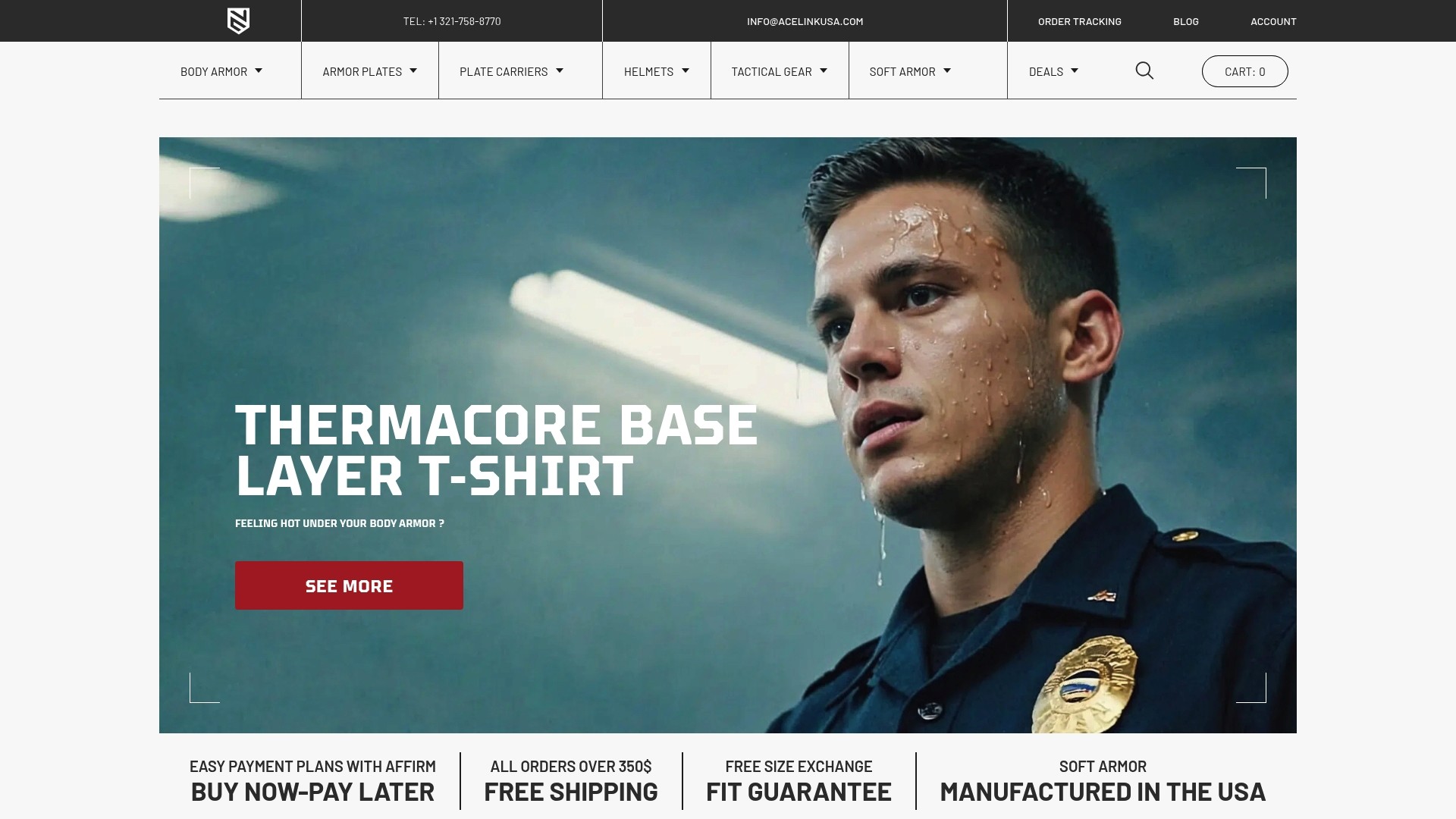
Discover how innovative new materials are enhancing the tactical gear to create a high-performance Cooling T-shirt. Designed for Demanding Conditions - Thermacore Base Layer T-shirt keeps you drier, cooler, and more focused — whether under body armor or during intense activity.
Importance Of Thermal Comfort For Wearers
Performance And Physiological Impact
Long-Term Health Considerations
How Body Armor Affects Thermal Performance
Thermal Barrier Mechanisms
Material And Design Thermal Dynamics
Key Factors Influencing Thermal Comfort
Environmental And Physiological Interactions
Material Science And Design Considerations
Real-World Implications Of Thermal Comfort
Operational Performance Dynamics
Health And Safety Considerations
Quick Summary
Takeaway | Explanation |
|---|---|
Thermal comfort is essential in body armor | Maintaining thermal comfort impacts performance and health for users like military and law enforcement personnel. |
Improved materials enhance thermal management | Advanced materials and design elements significantly reduce heat accumulation and enhance moisture management in body armor. |
Ignoring thermal factors compromises performance | Reduced cognitive processing speed and increased fatigue occur when operators experience thermal discomfort during critical tasks. |
Long-term thermal stress poses health risks | Continuous exposure to heat while wearing armor can lead to serious health issues, including heat exhaustion and cardiovascular strain. |
Integration of technology is critical | Innovative solutions like strategically placed ventilation and moisture-wicking fabrics transform body armor from a liability to an asset. |
Defining Thermal Comfort in Body Armor
Thermal comfort represents a critical yet often overlooked aspect of body armor performance. More than just temperature regulation, it encompasses a complex interplay between human physiology, environmental conditions, and the design of protective equipment. Understanding thermal comfort means recognizing how body armor impacts an individual’s ability to maintain optimal internal temperature during high-stress and physically demanding scenarios.
The Physiological Challenge of Body Armor Thermal Management
Body armor inherently creates a thermal barrier that disrupts natural heat dissipation mechanisms. Research examining body armor’s physiological impacts reveals that protective gear significantly inhibits convective and evaporative cooling processes. This thermal restriction can lead to several critical challenges:
Increased core body temperature during extended wear
Reduced sweat evaporation efficiency
Potential performance degradation under heat stress
The human body generates substantial heat during physical activities, and body armor creates a microclimate that traps this thermal energy.
Professional users like law enforcement and military personnel must contend with these thermal constraints while maintaining peak performance in diverse environmental conditions.
Key Components of Thermal Comfort in Protective Gear
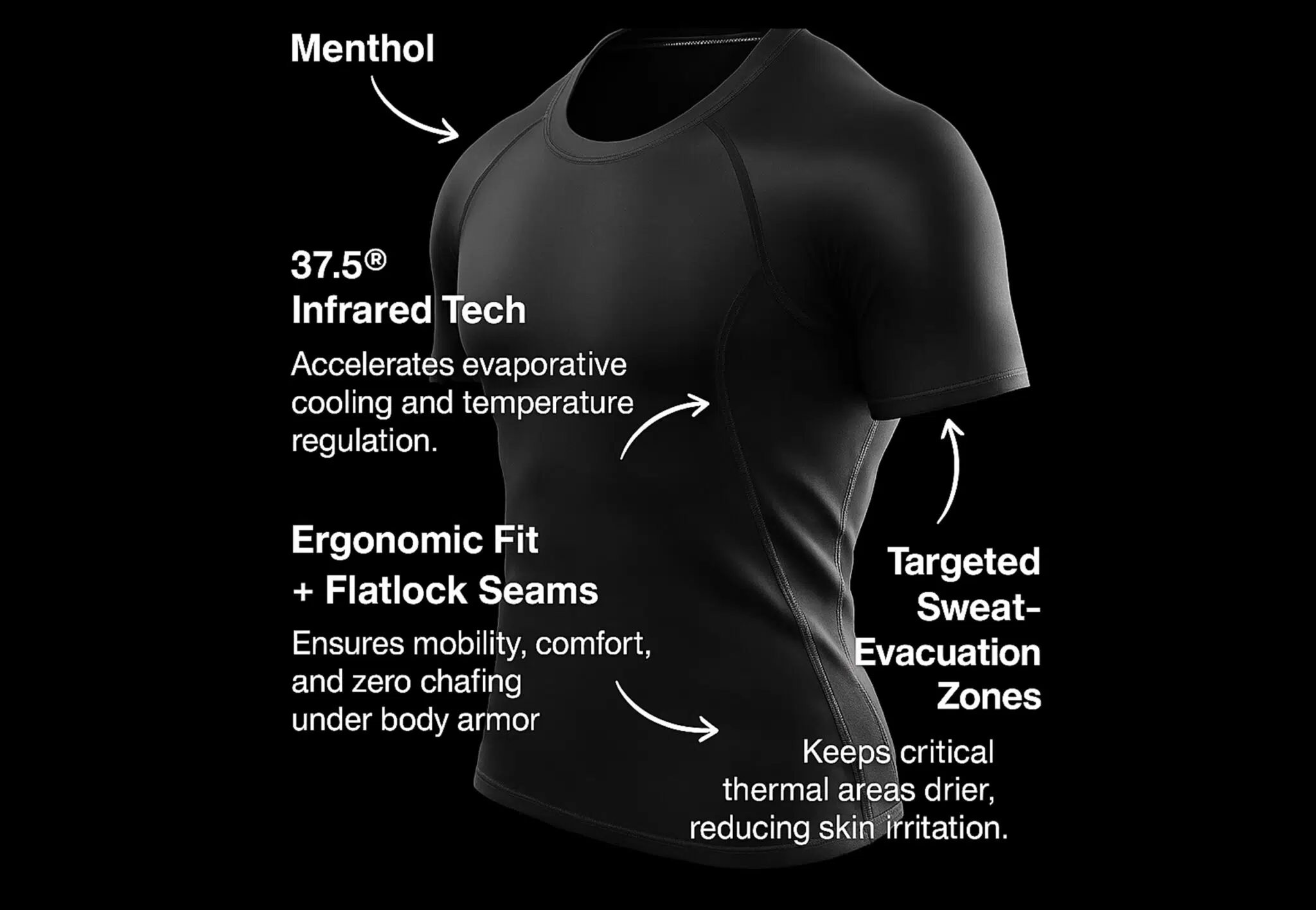
Effective thermal management in body armor involves multiple interconnected factors. These include heat dissipation, material breathability, moisture-wicking capabilities, strategic ventilation design, and understanding individual physiological responses. Modern thermal management solutions like the Thermacore Base Layer Cooling T-shirt integrate advanced technologies to address these thermal challenges. THERMACORE BASE LAYER COOLING T-SHIRT:
Reduces Heat & Sweat: Lowers skin temperature and sweat by up to 24% for improved comfort under armor.
Increases Performance: Helps regulate core temperature, boosting endurance and physical output by up to 26%.
Thermacore T-shirt removes moisture before it turns into sweat, helping you maintain an ideal core temperature so that you can perform your best, so you can increase your efficiency and use less energy to do the same amount of work. Unlike wicking materials that simply distribute moisture, the temperature-regulating fabrics and materials with Thermacore Technology actually remove it.
Thermacore t-shirt is designed to work with all types of body armor. Its key goal is to help regulate temperature and moisture under soft armor, hard plates, or hybrid vests. That means less heat, less fatigue, and better focus.
The primary goal is to create a protective environment that balances critical safety requirements with user comfort. This means developing armor systems that minimize heat accumulation, manage moisture effectively, and allow sufficient air circulation without compromising ballistic protection standards. Thermal comfort is not just about feeling cool, but maintaining cognitive performance, reducing fatigue, and ensuring operational readiness in challenging environments.
Importance of Thermal Comfort for Wearers
Thermal comfort extends beyond mere physical sensation, directly influencing operational effectiveness, physiological performance, and long-term health for body armor users. Professional operators, such as military personnel, law enforcement personnel, and security professionals, must recognize that thermal management is not a luxury but a critical operational requirement.
Performance and Physiological Impact
Research from the Journal of Thermal Biology reveals that body armor significantly alters human thermal dynamics, creating substantial physiological challenges. When thermal stress increases, critical performance metrics deteriorate:
Reduced cognitive processing speed
Decreased muscular coordination
Elevated heart rate and metabolic strain
Accelerated fatigue onset
Thermacore Compared to Traditional Layers:
Thermacore Technology base layer t-shirts utilize microencapsulated wax to adapt to temperature changes, reducing heat peaks and sweat production by up to 24 percent.
Conventional 100% PES shirts often retain >50g of moisture under stress, with users experiencing “very hot” discomfort by mid-activity.
The ThermaCore™ shirt retains significantly less moisture, delays discomfort to later stages, and enhances cool-down speed after exertion.
Lothing with Thermacore Technology has been proven to decrease the rate of core temperature buildup, increasing athletic performance by up to 26%.
Operators experiencing thermal discomfort are unable to maintain peak performance levels. The body redirects energy toward temperature regulation, compromising decision-making capabilities and physical responsiveness. In high-stakes scenarios, even minor performance reductions can have profound operational consequences.
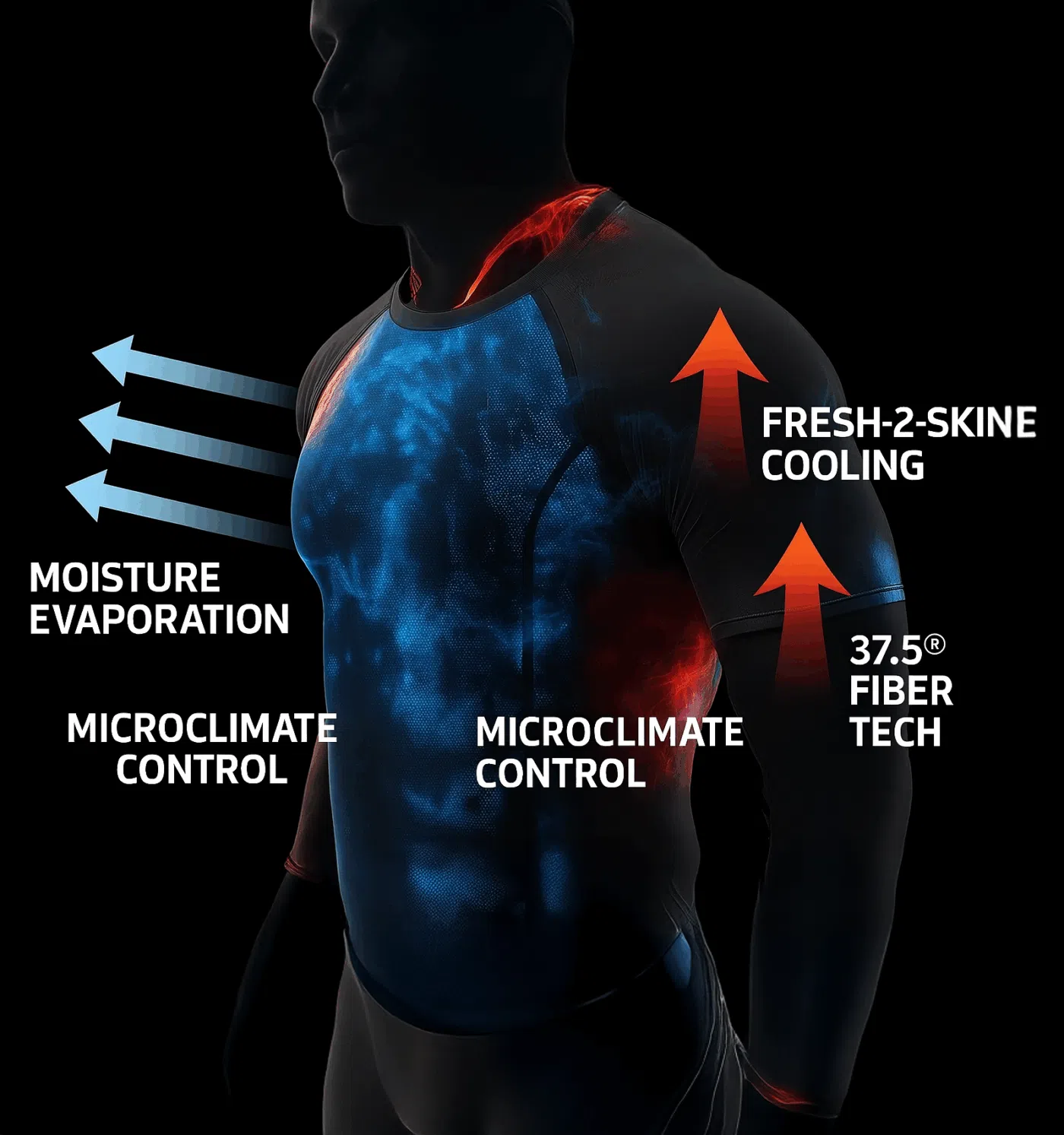
Understanding thermal comfort means recognizing it as a comprehensive system integrating material science, human physiology, and advanced engineering. The Concealed Body Armor T-Shirt represents a sophisticated approach to addressing these complex thermal management challenges, demonstrating how advanced technologies can transform protective equipment from a potential thermal liability into a performance-enhancing solution.
How Body Armor Affects Thermal Performance
Body armor represents a complex thermal system that fundamentally transforms an individual’s physiological heat exchange mechanisms. Far from being a passive protective layer, body armor actively modifies internal microclimate conditions, creating significant thermal management challenges for wearers across diverse operational environments.
Thermal Barrier Mechanisms
Research published in PLoS ONE quantified how body armor configurations directly impact human thermal performance. As protective capabilities increase, thermal burden correspondingly rises, creating a critical trade-off between safety and physiological comfort. The primary thermal barrier mechanisms include:
Reduced surface area for heat dissipation
Restricted air circulation around the body
Increased insulation from the external environment
Impediment of natural sweat evaporation
These mechanisms transform body armor from a simple protective shell into a dynamic thermal interface that continuously negotiates between protection and physiological stress. Professional operators must understand that each additional layer of protection potentially compromises thermal efficiency. When utilizing Thermacore Base Layer T-shirt as your Cooling T-shirt for use under your body armor, you gain:
Fast-Drying Fabric: Advanced fiber tech pulls moisture away before it turns into sweat—keeps you dry longer.
Built for Armor Use: Designed to fit comfortably under plate carriers and vests with minimal friction or bulk.
Instant Cooling Effect: Embedded menthol provides a cool-to-the-touch feel as body heat rises—no sweat activation needed.
Body Armor Thermal Dynamics
The thermal performance of body armor depends on intricate interactions between material composition, design architecture, and human physiology. Modern body armor manufacturers recognize that thermal management is not a secondary consideration but a primary design parameter. Strategic design elements like ventilation channels, moisture-wicking fabrics, and breathable composite materials help mitigate thermal stress.
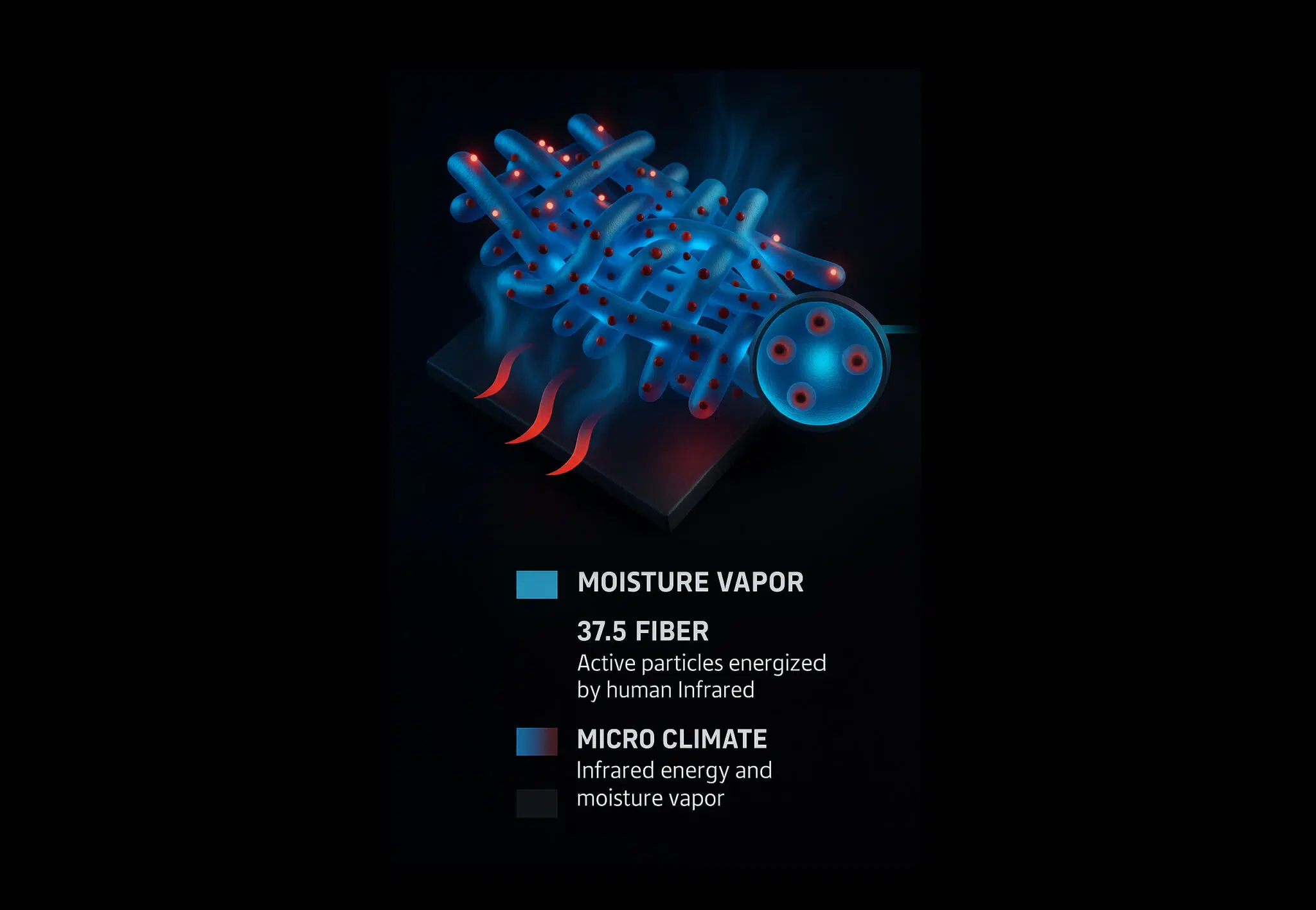
FRESH-2-SKIN® WITH MENTHOL
Thermacore’s Fresh-2-Skin® technology embeds microencapsulated menthol directly into the fabric, releasing a cool-to-the-touch sensation as body heat rises. This instant, long-lasting effect helps reduce skin temperature perception and enhances comfort.
Key Factors Influencing Thermal Comfort
Thermal comfort in body armor is a sophisticated interplay of multiple complex variables that extend far beyond simple temperature perception. Understanding these intricate factors enables manufacturers and users to develop more effective thermal management strategies for protective equipment.
Environmental and Physiological Interactions
Research from the U.S. Army Natick Soldier Research Center reveals that thermal comfort emerges from a dynamic relationship between external conditions and individual physiological responses. The key environmental and physiological factors include:
Ambient temperature and humidity levels
Individual metabolic heat production
Physical activity intensity
Wind speed and air circulation
Personal hydration status
These variables create a complex thermal ecosystem where each factor simultaneously influences and is influenced by the others. Professional operators must recognize that thermal comfort is not a static condition but a continuously negotiated state of physiological equilibrium.
Material Science and Design Considerations
Modern body armor thermal performance hinges on advanced material engineering and strategic design principles. Thermal comfort is no longer an afterthought but a primary design parameter. Critical design considerations include:
Breathability of protective materials
Moisture-wicking fabric technologies
Strategic ventilation channel placement
Weight distribution and air permeability
Multilayered thermal management systems
The table below summarizes the key factors influencing thermal comfort in body armor, organizing them into environmental/physiological variables and material/design considerations for easier comparison.
Factor Type | Example Factors | Explanation |
|---|---|---|
Environmental & Physiological | Ambient temperature and humidity | External conditions greatly affect body heat retention and dissipation while wearing armor. |
Environmental & Physiological | Individual metabolic heat production | The wearer’s metabolism and exertion generate internal heat that can become trapped under armor. |
Environmental & Physiological | Physical activity intensity | Higher activity increases body heat, compounding thermal challenges. |
Environmental & Physiological | Wind speed and air circulation | Increased airflow assists with evaporative cooling, while stagnant air worsens heat buildup. |
Environmental & Physiological | Personal hydration status | Hydration is crucial for effective sweating and internal temperature regulation. |
Material & Design | Breathability of protective materials | Facilitates airflow, improving heat dissipation from the body. |
Material & Design | Moisture-wicking fabric technologies | Removes sweat efficiently, reducing discomfort and risk of overheating. |
Material & Design | Strategic ventilation channel placement | Directs air movement to critical areas, enhancing cooling. |
Material & Design | Weight distribution and air permeability | Lighter, permeable designs reduce insulation and improve wearer comfort. |
Material & Design | Multilayered thermal management systems | Employs layers to balance protection and efficient heat management. |
Real-World Implications of Thermal Comfort in Body Armor
Thermal comfort in body armor transcends theoretical considerations, directly impacting operational effectiveness, individual safety, and mission-critical performance across professional environments. Understanding these real-world implications reveals the profound connection between thermal management and operational readiness.
Body Armor Operational Performance Dynamics
Research from Military Medicine demonstrates that thermal strain significantly influences an operator’s physiological and cognitive capabilities. Professional users experience multifaceted performance challenges when thermal comfort is compromised:
Reduced cognitive processing speed
Diminished decision-making accuracy
Accelerated physical fatigue
Increased risk of heat-related medical incidents
Compromised situational awareness
These performance degradations are not merely theoretical but represent tangible operational risks. In high-stakes environments like law enforcement, military deployments, and security operations, even minimal thermal stress can create potentially life-threatening scenarios where split-second decisions determine survival.
This table compares the operational and health impacts of poor versus effective thermal comfort in body armor, summarizing information from the related section for quick reference.
Impact Area | Poor Thermal Comfort | Effective Thermal Comfort |
|---|---|---|
Cognitive Performance | Reduced processing speed, decision fatigue | Maintains clarity and rapid decision-making |
Physical Endurance | Accelerated fatigue and decreased coordination | Sustained endurance and coordination |
Heart Rate & Strain | Elevated heart rate, cardiovascular stress | Normalized heart rate, reduced strain |
Health Risks | Increased risk of heat exhaustion, illness | Mitigates heat-related health risks |
Immune Function | Compromised with chronic stress | Better protected through thermal balance |
Mission Readiness | Compromised, higher operational risk | Maintained, supports mission success |
Health and Safety Considerations
Beyond immediate performance metrics, inadequate thermal management poses substantial long-term health risks for body armor wearers. Chronic thermal stress transforms body armor from a protective asset into a potential physiological liability. Professional operators must recognize that prolonged exposure to suboptimal thermal conditions can lead to:
Increased cardiovascular system strain
Potential metabolic disruptions
Compromised immune system response
Elevated risk of heat-related illnesses
Accelerated physical and mental exhaustion
Innovative solutions like the Thermacore Base Layer Cooling T-shirt represent critical advancements in addressing these complex thermal management challenges. By integrating advanced material technologies, manufacturers are transforming body armor from a static protective layer into a dynamic, responsive thermal interface that adapts to the human body’s intricate physiological needs. Thermacore line of product does not provide ballistic protection on its own and is intended to be worn under body armor or plate carriers.
Upgrade Your Body Armor Experience with Next-Level Thermal Comfort
Struggling with overheating and discomfort while wearing body armor is more common than you think. As discussed in the article, thermal management and breathability play a critical role in operator performance, safety, and endurance. Traditional protective gear can trap heat and moisture, increasing fatigue and putting your health at risk. If you’ve felt the impact of thermal stress or want to maximize your comfort and efficiency, it’s time to explore solutions engineered for real-world conditions.
Discover the difference quality gear can make. Visit AcelinkArmor.com to find body armor that integrates advanced thermal comfort technologies. Our selection includes innovative options designed specifically to balance ballistic protection with superior thermal comfort, breathability and moisture-wicking properties.
Frequently Asked Questions About Body Armor
What is thermal comfort in body armor?
Thermal comfort in body armor refers to the balance between body temperature regulation and the protective aspects of the armor. It involves how well the armor allows heat dissipation and manages moisture, affecting the wearer’s performance and comfort during physical activities.
How does body armor affect thermal management?
Body armor affects thermal management by creating a thermal barrier that can trap heat, reducing the efficiency of convective and evaporative cooling. This can lead to increased core body temperature, decreased sweat evaporation, and overall discomfort for the wearer, potentially impacting performance.
What factors influence thermal comfort while wearing body armor?
Factors that influence thermal comfort include material breathability, moisture-wicking capabilities, ventilation design, ambient temperature and humidity, physical activity level, and personal hydration status. Each of these elements interacts to affect the user’s thermal comfort and performance.
Why is thermal comfort important for body armor users?
Thermal comfort is crucial for body armor users as it directly impacts operational effectiveness, cognitive processing, and physical performance. Adequate thermal management can prevent heat-related illnesses and ensure that wearers maintain peak performance, especially in demanding situations.
Recommended
Body Armor and Combat Medics: First Aid Techniques for Trauma - Ace Link Armor
Rifles vs Shotguns vs Pistols: Which is best for home defense - Ace Link Armor
Ballistic Helmet MICH Combat Coyote Brown with Helmet Cover - Ace Link Armor
Recommended Product Path
Use this product path as a starting point, then confirm sizing, protection level, documentation, and lawful use before buying: Concealable vests; soft armor panels; carrier-compatible base layers.
Continue Reading
These guides help answer the next questions a buyer usually has after this topic.